Aevo Is an ETH Perpetual Trading App and Market Guide
Aevo Is a crypto derivatives trading venue associated with perpetual markets, options-style infrastructure, and app-based workflows for traders who want exposure to assets such as ETH without using a simple spot purchase. In practical terms, Aevo is best understood as a trading interface where users review market prices, connect a wallet, manage collateral, place leveraged orders, and monitor open positions while accepting the risks of liquidation, volatility, fees, and smart contract exposure.
Aevo is not the same experience as buying ETH and holding it in a wallet. Aevo focuses on derivative contracts, which means a user may be trading price exposure rather than receiving the underlying asset. That distinction matters because perpetual contracts can move quickly, margin requirements can change, and a position can be closed by the system if collateral is not enough to support the trade. Aevo can be useful for active traders, but it requires more preparation than a basic exchange account.
Aevo also sits within the broader DeFi and crypto derivatives conversation. Traders often compare an app like Aevo with centralized futures venues, decentralized perpetual exchanges, spot Ethereum markets, and self-custody wallets. Each route has different tradeoffs around custody, execution, transparency, liquidity, settlement, fees, and operational responsibility. This guide explains the core workflow in plain language so a reader can understand what Aevo does before deciding whether to explore the app further.
What is Aevo?
Aevo is commonly described as a crypto trading platform built around derivatives markets. The main idea is to let users trade contracts linked to digital assets such as ETH, rather than only buying or selling tokens directly. For someone searching for Aevo because they saw an ETH perpetual page, the important point is that Aevo is centered on market access, order entry, risk controls, and position management.
Aevo may appeal to users who already understand Ethereum wallets, stablecoin collateral, trading interfaces, and the basic structure of perpetual futures. A perpetual contract has no fixed expiry date, unlike a traditional dated futures contract. Instead, its price is kept close to the underlying market through mechanisms such as funding payments, index pricing, and arbitrage. Aevo presents those mechanics through an app interface, but the user still needs to understand what they mean.
The protocol and app should be evaluated through current official materials before use. Crypto products change frequently, and details such as supported assets, eligible jurisdictions, margin rules, network configuration, deposit methods, fees, and contract specifications may change. This page is an informational overview of Aevo and ETH perpetual trading concepts, not financial advice or a guarantee that any feature is available to every user.
How does Aevo work for ETH perpetual trading?
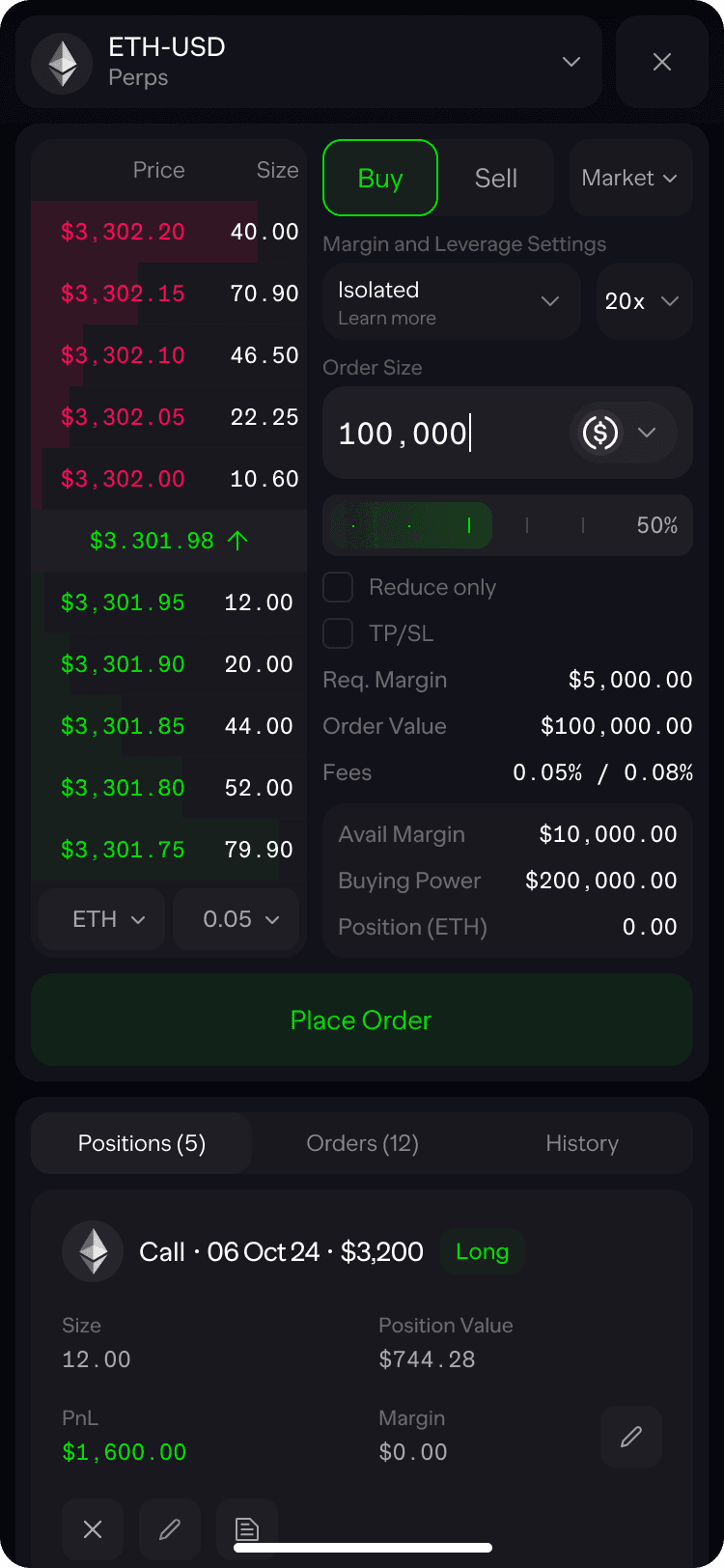
Aevo works by giving traders an interface for opening and closing positions that track the price of ETH. In an ETH perpetual market, a trader can generally express a long view if they expect ETH to rise or a short view if they expect ETH to fall. Aevo may show an order book, mark price, index price, funding information, leverage controls, collateral balances, and estimated liquidation levels so the trader can evaluate the position before submitting an order.
Aevo users typically begin by connecting a supported wallet, reviewing network and account requirements, and depositing or allocating collateral. Collateral is the value that backs open positions. If the market moves against a position, collateral absorbs the loss. If losses approach the maintenance margin requirement, the position may be liquidated. This is why Aevo can feel efficient for active traders but unforgiving for users who treat leverage casually.
In practice, Aevo trading depends on execution quality and risk controls. A market order may fill quickly but can suffer slippage in fast markets. A limit order may offer better price control but might not fill. A stop or reduce-only order can help manage downside, but no order type eliminates the risk of gaps, latency, failed transactions, thin liquidity, or unexpected market movement. Aevo should be approached as a trading tool that requires continuous awareness.
Why do traders use Aevo instead of simply buying ETH?
Aevo can serve a different purpose from spot ETH ownership. A spot buyer purchases ETH, transfers it if desired, and participates directly in the asset's price movement. A perpetual trader uses a contract to gain price exposure while managing collateral and leverage. Aevo may therefore attract users who want to hedge an ETH holding, trade short-term volatility, express a directional view, or manage exposure without moving a large spot balance.
Aevo can also fit workflows where a trader wants flexible position sizing. With derivatives, the notional exposure can be larger than the posted collateral when leverage is used. That can increase capital efficiency, but it also magnifies losses. Aevo does not make a trade safer simply because the interface is streamlined. The same leverage that makes a small price move profitable can also make a small adverse move damaging.
The choice between Aevo and spot markets should come down to purpose. If the goal is long-term ETH ownership, custody, staking, or use in Ethereum applications, spot ETH may be more appropriate. If the goal is active price exposure, hedging, or short-term trading, an ETH perpetual market may be relevant. A user researching the dedicated should first be clear about which goal they actually have.
How do you get started with Aevo?
Aevo onboarding is usually a sequence of technical and risk checks rather than a single click. A new user should slow down before depositing funds, especially if they are new to self-custody wallets or derivatives. The app interface may make trading look familiar, but the responsibilities are different from a conventional brokerage or a basic crypto spot exchange.
Review the current Aevo app, docs, supported jurisdictions, and market specifications from official sources.
Prepare a compatible wallet and confirm that the account, network, and collateral asset are correct.
Deposit only funds that fit a clearly defined trading plan and risk limit.
Study the ETH perpetual screen, including price, funding, leverage, margin, and liquidation estimates.
Place a small test trade only after understanding order types, fees, settlement, and withdrawal steps.
Monitor the position actively and use risk controls instead of assuming the trade can be ignored.
Aevo users should also confirm operational basics before relying on the app. That includes wallet security, phishing protection, recovery phrase storage, browser hygiene, and the exact URL being used. A professional-looking fake page can imitate a trading app, so bookmarks, official channels, and wallet transaction review are important. Aevo research should include security habits, not only market analysis.
What fees and costs should Aevo users understand?
Aevo trading costs can include more than the visible trading fee. A trader may face maker or taker fees, funding payments, spread, slippage, network-related costs, deposit or withdrawal costs, and the opportunity cost of locked collateral. Some costs are explicit and shown by the app; others are embedded in execution quality. Aevo users should inspect the order preview and the current fee documentation before assuming a trade is inexpensive.
Aevo funding rates are especially important in perpetual markets. Funding is a periodic payment between long and short traders designed to keep the contract price aligned with the underlying index. Depending on market conditions, a long position may pay funding or receive it, and the same is true in reverse for shorts. A trade that looks attractive on price direction can become less attractive if funding is unfavorable for a long time.
The protocol may also expose users to indirect costs during volatile periods. Fast ETH moves can widen spreads, increase slippage, make liquidations more likely, and create execution outcomes that differ from a calm market. Aevo should be assessed with total trading cost in mind, not just the headline fee schedule. For users comparing pages within this topic, an can be a useful internal reference point when planning a trade.
Is Aevo safe to use?
Aevo safety depends on several layers: the user's own wallet practices, the app's current infrastructure, contract and market design, liquidity, oracle or index methodology, and the trader's risk management. No crypto trading platform can remove market risk. A user can be correct about the long-term direction of ETH and still lose money on a leveraged perpetual position if timing, margin, or funding works against them.
Aevo users should think about safety in operational terms. Verify the domain, avoid links from untrusted messages, inspect wallet prompts, keep recovery phrases offline, and consider using a separate wallet for trading. If Aevo requires bridging, deposits, or network-specific actions, each transaction should be checked carefully. Mistakes in crypto transfers can be difficult or impossible to reverse.
The financial risk is just as important. ETH can move sharply during macro news, protocol events, liquidation cascades, or sudden changes in liquidity. A leveraged Aevo position can be liquidated before a trader has time to react. Stop orders, smaller position sizes, lower leverage, and clear invalidation levels can reduce some risk, but they do not guarantee protection. Users should verify current contract rules with official Aevo sources before placing trades.
How does Aevo compare with other crypto trading routes?
Aevo belongs in a broader set of choices that includes spot exchanges, centralized futures platforms, decentralized perpetual exchanges, options protocols, and direct wallet-based DeFi strategies. The best route depends on what the user is trying to do. Aevo may be relevant for derivative exposure, but it is not automatically better than every alternative for every trader.
Route
Typical use
Main tradeoff
Aevo ETH perpetuals
Active long or short ETH exposure
Leverage, liquidation, funding, and platform risk
Spot ETH purchase
Owning ETH directly
No short exposure without additional tools
Centralized futures exchange
High-liquidity derivatives trading
Custody, account controls, and venue risk
DeFi lending or liquidity protocols
Yield, borrowing, or asset deployment
Smart contract, oracle, and liquidity risk
Aevo comparisons should include custody and control. A centralized venue may offer deep liquidity and familiar account recovery, but the user gives up direct custody. A decentralized or app-connected route may preserve more wallet control, but it places more responsibility on the user. Aevo can be attractive when its market design matches a trader's needs, yet the practical decision should include reliability, liquidity, available order types, current fees, and personal risk tolerance.
What should you verify before trading on Aevo?
Aevo research should end with verification, because crypto interfaces and market terms can change. Before using Aevo, a reader should confirm the current app domain, wallet support, collateral requirements, trading availability, fee schedule, funding mechanics, liquidation formula, withdrawal process, and any restrictions that apply to their location. The most useful habit is to treat every important detail as something to confirm, not assume.
Aevo users should also test their understanding with a simple question: what exactly has to happen for this trade to lose money? If the answer is vague, the position is not ready. The trader should know the entry price, stop area, liquidation estimate, maximum intended loss, funding sensitivity, and exit plan. Aevo provides a market interface, but the app cannot supply discipline on behalf of the user.
For a new user, the best Aevo workflow is cautious and incremental. Learn the terminology, confirm official details, keep position sizes modest, and avoid using leverage as a substitute for analysis. Aevo can be a powerful way to interact with ETH perpetual markets, but it belongs in a broader risk framework that includes wallet security, market volatility, and the possibility of losing the entire amount committed to a trade.
Is Aevo right for ETH market exposure?
Aevo may be right for someone who already understands crypto wallets, derivatives, collateral, and fast-moving ETH markets. It may not be right for someone who wants simple ownership, passive exposure, or a low-maintenance way to hold Ethereum. Aevo is most relevant when a trader needs the specific features of a perpetual market and is prepared to manage the obligations that come with them.
Aevo should therefore be viewed as a specialized tool rather than a universal answer. It can help experienced users express directional views, hedge, or manage short-term exposure, but it also introduces liquidation risk, funding uncertainty, technical complexity, and platform dependency. Anyone considering Aevo should verify current details through official sources, start with education rather than urgency, and avoid committing funds they cannot afford to lose.
Reader rating:
4.8 / 5
based on 582 ratings
Questions and Answers
What is Aevo used for?
Aevo is used for crypto derivatives trading, including perpetual market exposure to assets such as ETH. Instead of simply buying ETH on a spot exchange, a trader can use Aevo to open long or short positions backed by collateral. This can be useful for active trading or hedging, but it involves margin, funding, liquidation risk, and technical wallet responsibilities.
Is Aevo the same as buying ETH?
No. Buying ETH gives you direct ownership of the asset, while trading an ETH perpetual on Aevo gives you contract-based price exposure. A perpetual position can use leverage, may require funding payments, and can be liquidated if the market moves against your collateral. Spot ETH is simpler, while Aevo-style derivatives require more active risk management.
How do I start using Aevo safely?
Start by verifying the official Aevo app and documentation, then confirm supported wallets, networks, collateral assets, fees, and market rules. Use strong wallet security, avoid links from untrusted sources, and inspect every wallet prompt before signing. If you decide to test the platform, begin with a small amount and understand order types, funding, margin, and withdrawals first.
What are the main risks of Aevo ETH perpetual trading?
The main risks include ETH price volatility, leverage-driven liquidation, unfavorable funding rates, slippage, smart contract or platform issues, wallet mistakes, and phishing. Even a correct market view can lose money if the position is overleveraged or poorly timed. Users should verify current rules with official sources and never treat derivatives trading as guaranteed income.
Does Aevo charge fees?
Aevo trading may involve several costs, including trading fees, spread, slippage, funding payments, and network or withdrawal-related costs depending on the current setup. These details can change, so users should check the live fee schedule and order preview before trading. The true cost of a perpetual trade is often broader than the headline maker or taker fee.
Can beginners use Aevo?
A beginner can research Aevo, but trading perpetual contracts is more complex than buying crypto on a basic spot platform. New users need to understand wallets, collateral, leverage, liquidation prices, funding, and order execution. Someone without derivatives experience should prioritize education, use very small test amounts if they proceed, and avoid high leverage or rushed decisions.
How is Aevo different from a centralized futures exchange?
Aevo is generally discussed in the context of app-connected crypto derivatives and DeFi-style workflows, while centralized futures exchanges usually rely on custodial accounts. Centralized venues may offer familiar account features and deep liquidity, but users give up more direct custody. Aevo-style workflows can provide different control and transparency tradeoffs, but they also require stronger wallet and transaction discipline.
O LinkedIn e terceiros usam cookies essenciais e não essenciais para fornecer, proteger, analisar e aprimorar nossos Serviços, e para exibir anúncios relevantes (inclusive anúncios
profissionais e com vaga
) dentro e fora do LinkedIn. Saiba mais na nossa
Política de Cookies
.
Selecione Aceitar para consentir ou Rejeitar para recusar cookies não essenciais para este uso. Você pode atualizar suas opções nas suas
configurações
quando quiser.
A IA Generativa pode fazer muito mais pelo seu programa de inovação do que você imagina.
O maior diferencial está em como ela é aplicada aos processos e integrada à estratégia da sua empresa.
No vídeo,
Luis Carvalho
, nosso CEO Global, deixa claro: durante o AEVO NEXT, você irá conhecer como os novos GenAI Apps personalizam jornadas de inovação para gerar impacto real.
Marque na agenda: 07 de abril | 14h | Online e Ao Vivo.
Não perca tempo e garanta sua vaga gratuita agora no link disponível nos comentários.