Aevo Is an ETH Perpetual Trading Platform Overview
Aevo Is a crypto derivatives platform where users can explore markets such as ETH perpetual contracts, compare order types, manage collateral, and understand margin before taking risk. Aevo is best approached as a trading venue for experienced users who already understand wallets, stablecoin collateral, funding rates, liquidation risk, and the difference between owning ETH and trading a contract linked to ETH price movement.
Aevo is often searched by people who want a plain explanation before opening a position. The key point is simple: an ETH perpetual is not the same as buying spot ETH. It is a derivative contract designed to track the price of ETH without an expiry date, and it can involve leverage, margin requirements, funding payments, and forced liquidation if the position moves too far against the trader. Aevo can make the workflow feel familiar, but the risk remains real.
What is Aevo?
Aevo is a crypto trading platform focused on derivatives rather than simple buy-and-hold spot purchases. In everyday terms, Aevo gives users a place to trade contracts connected to crypto prices, including ETH perpetual markets. A perpetual contract is a futures-like product that does not have a fixed settlement date, so the position can remain open as long as margin conditions are met and the market remains available.
Aevo sits in the broader world of DeFi, crypto exchanges, layer-2 infrastructure, wallets, stablecoin collateral, and on-chain settlement. That makes Aevo different from a traditional brokerage account and also different from a basic token swap interface. A user is not merely selecting one token and receiving another. The user is managing a trading position with entry price, size, direction, margin, fees, and possible liquidation.
Aevo may appeal to traders who want a more specialized interface for derivatives. That said, Aevo should not be treated as a shortcut around learning the mechanics. A clear understanding of leverage, order execution, funding, collateral balances, and wallet security matters more than the visual simplicity of any trading screen. Users should verify current product availability, fee schedules, and regional restrictions through official Aevo sources before using real funds.
How does Aevo work for ETH perpetual trading?
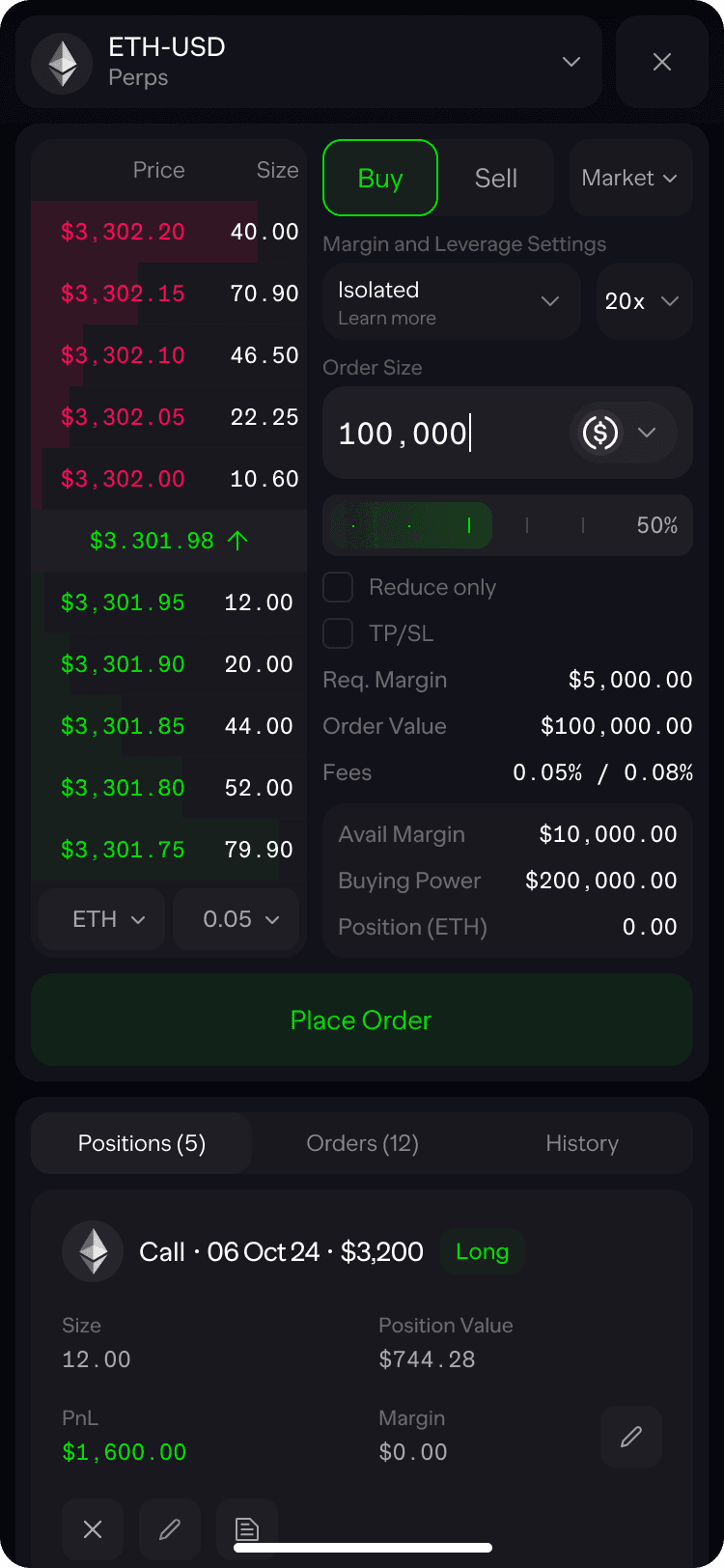
Aevo works by letting a user connect a compatible wallet, deposit or allocate supported collateral, choose a market such as ETH perpetuals, and place a long or short order. A long position generally benefits if ETH price rises after entry, while a short position generally benefits if ETH price falls after entry. Aevo then displays the open position, unrealized profit or loss, margin usage, and liquidation-related information.
The protocol and interface may combine familiar exchange concepts with crypto-native settlement. Traders usually see order books or trading panels, charting tools, size inputs, leverage controls, balances, and a position table. In practice, Aevo can feel closer to a derivatives exchange than a token swap page, because every input affects position exposure rather than simply completing a one-time exchange.
Aevo ETH perpetual trading depends on market liquidity, oracle or index pricing design, funding mechanics, and risk controls. Funding rates are important because they can create recurring costs or credits between long and short positions. A position that looks profitable on price movement can still be affected by funding, trading fees, spreads, slippage, and changing margin requirements. For a focused market page, readers may also want to review the related before placing an order.
What can traders use Aevo for?
Aevo is mainly relevant for users who want exposure to crypto price movement through derivatives. A trader might use Aevo to take a directional view on ETH, hedge an existing ETH holding, test a short-term strategy, or compare perpetual pricing with spot markets. These are advanced use cases, and none of them guarantees a profit. The same tools that make a platform flexible can also magnify losses.
Aevo can also be useful as an educational reference for understanding how crypto derivatives are structured. Looking at a perpetual market teaches a user to think about entry price, mark price, funding, collateral, liquidation, and the difference between realized and unrealized profit or loss. Even someone who chooses not to trade can learn why perpetual futures attract active market participants and why they carry more operational complexity than spot investing.
Aevo should be viewed in context with other crypto market tools. Spot exchanges are often simpler for users who only want to buy ETH. Decentralized exchanges can be useful for token swaps. Centralized derivatives venues may offer deep liquidity but require account-based custody and identity checks. Aevo belongs to the more specialized category where self-custody concepts, derivative risk, and exchange-like execution meet.
How do you get started with Aevo?
Aevo onboarding generally begins with preparation rather than a trade. A careful user first confirms the official Aevo website or app, checks whether the product is available in their region, reviews current fees, and understands wallet permissions. Crypto scams often imitate real trading brands, so the source of the link matters. A bookmark from a verified official source is safer than a random message, ad, or social post.
Aevo then requires the user to think through wallet setup and collateral. A user should understand which assets are supported, which network is being used, what gas or transaction costs may apply, and how withdrawals work. If the trading interface asks for approvals, signatures, or deposits, each action should be read carefully. A wallet signature can authorize important account changes, not just a harmless login.
A practical Aevo workflow usually looks like this:
Verify the official Aevo app and product availability.
Connect a supported wallet and review requested permissions.
Deposit or allocate supported collateral only after checking network details.
Select the ETH perpetual market and inspect price, funding, spread, and liquidity.
Choose order type, size, direction, and margin settings before confirming.
Monitor the position until it is reduced, closed, or settled according to the platform workflow.
Aevo users should start small if they are learning the interface. The first goal should be understanding the mechanics, not maximizing exposure. Many trading losses come from basic workflow mistakes: selecting the wrong direction, using too much leverage, ignoring funding, misunderstanding liquidation price, or assuming a pending order has already filled.
What fees and costs matter on Aevo?
Aevo trading costs can include explicit fees and less obvious market costs. Explicit fees may include maker or taker fees, settlement-related costs, withdrawal fees, or network costs depending on the current platform design. Less obvious costs can include bid-ask spread, slippage, funding payments, and the opportunity cost of locked collateral. Because fee schedules can change, users should verify the latest numbers directly with official Aevo materials before trading.
Aevo ETH perpetual traders should pay particular attention to funding. Funding is a mechanism designed to keep the perpetual contract price aligned with the underlying market. Depending on market conditions, a trader may pay or receive funding while the position stays open. This means time matters. Holding a leveraged position for days is not the same as placing a quick intraday trade, even if the entry price and direction are identical.
Aevo costs also depend on behavior. Market orders may execute quickly but can cross the spread and create slippage in fast markets. Limit orders may improve price control but might not fill. Increasing leverage can reduce the collateral required for a given position size, yet it also narrows the distance to liquidation. A lower headline fee does not make a poor risk setup safe.
Is Aevo safe to use?
Aevo safety has several layers: smart contract design, platform operations, wallet hygiene, market risk, and user behavior. No crypto derivatives venue can remove trading risk. Even if the interface functions correctly, ETH can move sharply, liquidity can thin out, funding can shift, and a leveraged account can be liquidated. Aevo users should separate platform risk from market risk because both can matter at the same time.
Aevo users should protect themselves by verifying the official app, using a secure wallet, avoiding unknown links, and reviewing approvals. A hardware wallet may reduce some signing risks, but it does not prevent a user from approving a bad transaction or choosing an unsafe trade size. Two traders can use the same platform and get very different outcomes because one manages exposure while the other overuses leverage.
Aevo should also be considered from a regulatory and tax perspective. Crypto derivatives rules vary by jurisdiction, and reporting obligations can apply even when activity happens through crypto-native tools. U.S. taxpayers, for example, generally need to track taxable crypto activity regardless of whether a platform sends a tax form. This page is informational only, not financial, legal, or tax advice. Users should keep records and consult qualified professionals when needed.
How does Aevo compare with alternatives?
Aevo can be compared with spot exchanges, decentralized swap protocols, and centralized derivatives exchanges. Spot exchanges are usually simpler because the user buys or sells the asset itself. A decentralized swap protocol is useful for exchanging tokens through liquidity pools. A centralized derivatives exchange may provide account-based products and deep order books. Aevo is closer to a specialized crypto derivatives venue where wallet-based access and advanced trading concepts are central.
Aevo may stand out for users who specifically want perpetual trading workflows rather than broad exchange menus. The relevant comparison is not just branding or interface design. A serious comparison looks at supported markets, collateral rules, execution quality, fees, withdrawal process, uptime, documentation, risk controls, and the clarity of liquidation data. Traders should also check whether Aevo supports the specific market and region they intend to use at the time they visit.
For someone deciding between spot ETH and an Aevo ETH perpetual, the simplest distinction is ownership. Spot ETH means holding the asset directly, subject to custody and market movement. An ETH perpetual on Aevo is a contract exposure that can be long or short and may use leverage. The contract can be useful for active strategies, but it adds funding, margin, liquidation, and platform-specific rules.
What should new users check before trading on Aevo?
Aevo is easier to evaluate when a user slows down and checks the parts that affect real outcomes. The trading screen can show a clean order ticket, but the user still needs to understand what happens after the order fills. Margin, leverage, maintenance requirements, funding, and closing mechanics are not secondary details. They are the core of perpetual trading.
Aevo users should review several points before making a decision:
Whether the official Aevo market is available to them.
Which collateral assets and networks are currently supported.
How maker fees, taker fees, funding, and withdrawals work.
What liquidation price means for the selected position size.
How to close, reduce, or manage an open ETH perpetual position.
Aevo can be part of a broader trading routine only when recordkeeping is disciplined. A trader should save transaction details, deposits, withdrawals, trade history, funding entries, and realized profit or loss. Good records help with performance review and may also matter for taxes. The best time to create a tracking process is before the first trade, not after many wallets and transactions become difficult to reconstruct.
Is Aevo right for ETH perpetual traders?
Aevo may be suitable for users who already understand crypto wallets and want a dedicated derivatives experience. It may be unsuitable for users who are still learning basic ETH custody, token transfers, gas fees, or market volatility. The presence of a polished interface does not reduce the need for independent judgment. Aevo is a tool, and a tool can be used carefully or carelessly.
Aevo is best approached with a clear plan: know the market, know the position size, know the maximum loss scenario, and know how to exit. Traders should verify all current details with official Aevo sources because products, fees, supported regions, and risk parameters can change. When used thoughtfully, Aevo can help users understand and access ETH perpetual markets. When used casually, the same features can expose users to fast and significant losses.
Reader rating:
4.8 / 5
based on 582 ratings
Questions and Answers
What is Aevo used for?
Aevo is used for crypto derivatives trading, including markets such as ETH perpetual contracts. Instead of simply buying spot ETH, a user can take long or short contract exposure, manage collateral, and monitor margin. Because derivatives can involve leverage, funding, and liquidation, Aevo is more appropriate for users who already understand wallet security and trading risk.
Is trading ETH perpetuals on Aevo the same as buying ETH?
No. Buying ETH means owning the asset directly, while trading an ETH perpetual on Aevo means opening a derivative position linked to ETH price movement. A perpetual can be long or short, may involve leverage, and can be liquidated if margin becomes insufficient. It also may include funding payments and platform fees.
What should I check before using Aevo?
Before using Aevo, verify the official app source, regional availability, supported collateral, network requirements, wallet permissions, current fees, and withdrawal process. For ETH perpetual trading, also check funding rates, liquidity, spread, order type, leverage, and liquidation price. These details can change, so users should confirm them through official Aevo materials before trading.
Does Aevo guarantee profits from ETH perpetual trading?
No platform can guarantee profits from ETH perpetual trading. Aevo provides access to derivatives tools, but market direction, volatility, liquidity, funding, fees, and user decisions determine outcomes. Leverage can magnify gains and losses, and liquidation can occur quickly in volatile conditions. Users should treat Aevo as a high-risk trading environment, not a guaranteed income product.
What fees can affect an Aevo trade?
Aevo trades may be affected by maker or taker fees, funding payments, spreads, slippage, withdrawal costs, and network-related costs depending on the current platform setup. The exact fee schedule can change over time. Users should review official Aevo fee information before placing trades and should consider total trade cost, not only the visible order ticket fee.
Is Aevo safe for beginners?
Aevo may be difficult for complete beginners because perpetual trading requires knowledge of wallets, collateral, margin, funding, order types, and liquidation risk. A beginner who is still learning basic crypto transfers may be better served by studying the mechanics first. If someone explores Aevo, they should use small amounts, verify every step, and avoid leverage they do not fully understand.
Can Aevo be used for hedging ETH exposure?
Aevo may be used by experienced traders to hedge ETH exposure with short or offsetting perpetual positions, but hedging is not simple. Position size, funding, collateral, liquidation price, and timing all matter. A hedge can reduce one type of risk while creating another. Users should model the trade carefully and avoid assuming that a short perpetual automatically creates perfect protection.
O LinkedIn e terceiros usam cookies essenciais e não essenciais para fornecer, proteger, analisar e aprimorar nossos Serviços, e para exibir anúncios relevantes (inclusive anúncios
profissionais e com vaga
) dentro e fora do LinkedIn. Saiba mais na nossa
Política de Cookies
.
Selecione Aceitar para consentir ou Rejeitar para recusar cookies não essenciais para este uso. Você pode atualizar suas opções nas suas
configurações
quando quiser.
A IA Generativa pode fazer muito mais pelo seu programa de inovação do que você imagina.
O maior diferencial está em como ela é aplicada aos processos e integrada à estratégia da sua empresa.
No vídeo,
Luis Carvalho
, nosso CEO Global, deixa claro: durante o AEVO NEXT, você irá conhecer como os novos GenAI Apps personalizam jornadas de inovação para gerar impacto real.
Marque na agenda: 07 de abril | 14h | Online e Ao Vivo.
Não perca tempo e garanta sua vaga gratuita agora no link disponível nos comentários.