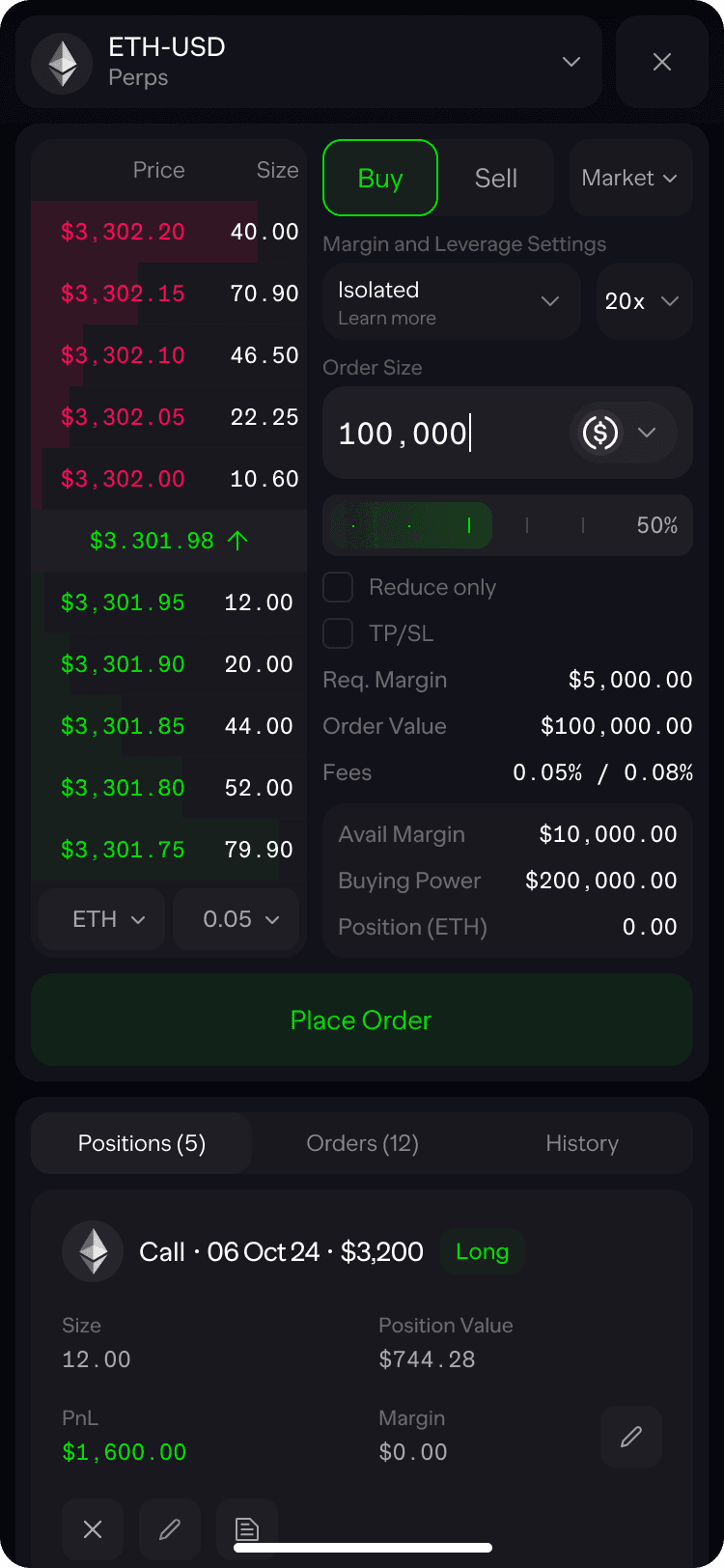
Aevo fees Is a guide to ETH perpetual trading costs
Aevo fees Is the cost structure a trader should review before opening or managing a perpetual ETH position, including maker charges, taker charges, funding payments, spread, slippage, network costs, and liquidation risk. Aevo fees can change, so the most useful approach is to understand each fee type, estimate the total cost of a trade, and verify current numbers in the official trading interface before committing capital.
Aevo fees matter because perpetual futures are not simple spot swaps. A trader can enter with leverage, hold a position without an expiry date, and pay or receive funding depending on market balance. That structure gives the market flexibility, but it also means trading cost is not a single line item. Aevo fees should be read as a full cost stack: execution fees at entry and exit, periodic funding, price impact, collateral management, and the risk of forced liquidation if margin falls too low.
For a new user looking at ETH perps, Aevo fees are best understood before thinking about direction. Whether the trade is long or short, the position starts with an execution price and ends with another execution price. Between those two events, funding, volatility, leverage, and account margin can affect the result. This page explains Aevo fees in practical terms for informational purposes only. It is not financial advice, and traders should verify all fee values with official sources because crypto market rules and schedules can update quickly.
What are Aevo fees for ETH perpetual markets?
Aevo fees are the charges and indirect costs connected with trading perpetual contracts on Aevo-style ETH markets. In plain language, they answer the question: what does it cost to open, hold, adjust, and close a leveraged ETH position? The visible trading fee is only one part of the answer. The complete cost can include maker or taker fees, funding, spread, slippage, deposit or withdrawal costs, and losses caused by liquidation mechanics.
Aevo fees are usually discussed through two execution roles. A maker order adds resting liquidity to the order book, while a taker order removes available liquidity by matching immediately. Maker and taker pricing is common across derivatives venues because the exchange needs liquidity and fast execution to coexist. If a trader places a limit order that waits in the book, the trade may be treated differently from a marketable order that executes right away.
The important point is that Aevo fees are not only about the percentage shown near an order ticket. A trader using high leverage can make a small fee feel large because the notional position is bigger than the collateral posted. If $1,000 of margin controls a larger ETH exposure, fees and funding are generally calculated on the larger position size, not on the margin alone. That is why Aevo fees should be modeled on notional value.
How does Aevo fees work when you place an order?
Aevo fees start with execution. When a trader submits an order, the platform determines whether that order is adding liquidity or taking liquidity. A limit order below the current ask for a long entry may rest until someone accepts it, while a market order is designed to fill quickly against existing liquidity. The fee treatment can differ because the two order types affect the market differently.
Aevo fees then interact with price quality. A low taker fee does not guarantee a low total cost if the order moves through thin liquidity or fills at a worse average price than expected. In practice, the displayed order book, the expected fill price, and the trade size all matter. Aevo fees and slippage should be reviewed together, especially during fast ETH moves or periods of reduced market depth.
The protocol or trading venue may also apply different rules for specific markets, account tiers, incentives, or campaigns. A trader should not assume that one pair, one account status, or one historical screenshot describes all current Aevo fees. The safest habit is to check the live order preview and the official fee page before placing size. If something looks unclear, reduce size or wait until the fee treatment is understood.
Why do maker, taker, and funding costs matter?
Aevo fees are easiest to understand when separated into execution cost and holding cost. Maker and taker charges are execution costs because they occur when an order fills. Funding is a holding cost because it can apply while the position remains open. On a perpetual futures venue, funding is used to help keep the contract price aligned with the underlying market price of ETH.
Aevo fees can feel predictable at the moment of entry, but funding makes the ongoing cost dynamic. If the market is crowded on one side, the funding rate may require longs to pay shorts or shorts to pay longs. The direction and size of funding can change with market conditions, so a position that looks inexpensive for one hour can become more costly if sentiment shifts and leverage builds up.
Aevo fees also interact with trade duration. A short-term trader may care most about taker charges and slippage because the position is opened and closed quickly. A longer-term trader may care more about funding because repeated funding intervals can outweigh the original entry fee. Neither approach is automatically better. The key is matching the fee model to the intended holding period and risk plan.
How can a trader estimate Aevo fees before opening a position?
Aevo fees should be estimated before the order is sent, not after the position is already exposed. A practical estimate starts with position notional, not account balance. If a trader uses leverage, the notional exposure may be several times larger than the deposited margin. That makes the position more sensitive to price movement, fees, and funding. The same percentage fee has a larger dollar effect when position size increases.
Aevo fees can be estimated with a simple workflow that keeps the main variables visible. The exact numbers should come from the live interface, but the structure is straightforward:
Identify the notional value of the ETH perpetual position.
Check whether the entry order is expected to be maker or taker.
Review the displayed fee estimate before confirming the trade.
Look at the current funding rate and the next funding time.
Estimate exit costs, including possible slippage during volatile conditions.
Leave enough margin buffer for adverse movement and maintenance requirements.
Aevo fees are only one side of the calculation. The trader also needs to consider bid-ask spread, funding variability, liquidation price, and whether the position can be managed calmly if ETH moves quickly. A trade that looks profitable before costs may look less attractive after realistic entry, holding, and exit assumptions are included.
What are the main use cases for Aevo fees research?
Aevo fees research is useful for several types of users. Active traders may compare order types to decide whether waiting with a limit order is worth the missed-fill risk. Hedgers may use ETH perpetual contracts to reduce exposure from spot holdings. Market makers may focus on spread capture, rebates, inventory risk, and whether the fee schedule supports their strategy. Each use case reads Aevo fees through a different lens.
Aevo fees are especially important for traders moving from spot markets into perpetual futures. Spot trading usually has a simpler cost model: buy, sell, and pay a trading fee plus spread. Perpetual trading adds leverage, funding, margin, and liquidation rules. Someone comfortable buying ETH on a spot exchange can still misunderstand the economics of an ETH perp if they ignore the recurring and conditional costs.
For readers exploring ETH-specific contracts, the linked page can help connect Aevo fees with position behavior, margin use, and market direction. The fee question is not separate from the trading question. Execution cost, funding, volatility, and risk tolerance all belong in the same pre-trade review.
Are Aevo fees the only costs to watch?
Aevo fees are central, but they are not the only cost. Spread is the difference between the best bid and best ask, and it can widen during volatility. Slippage is the difference between expected and actual execution price. Network or settlement costs may apply depending on how funds are deposited, withdrawn, bridged, or moved through connected wallets and infrastructure. These costs can matter even when the published trading fee seems small.
In practice, Aevo fees may be easier to see than liquidation risk, but liquidation can be much more damaging. Perpetual futures allow traders to control more exposure than their collateral alone would permit. If the market moves against the position, the account may be forced to close or partially close to protect the system. That outcome is not a normal trading fee, but it is a real cost of using leverage incorrectly.
Aevo fees also sit beside opportunity cost. A maker order may reduce execution fees or improve price, but it may fail to fill. A taker order may fill immediately, but it can pay a higher execution charge or accept worse price depth. The right choice depends on urgency, market conditions, and the trader's willingness to miss the trade. Cost control is not always the same as choosing the cheapest visible fee.
How do Aevo fees compare with other perpetual trading venues?
Aevo fees can be compared with other perpetual futures platforms by looking beyond headline rates. Many decentralized and centralized derivatives venues use maker-taker schedules, funding payments, margin rules, and liquidation engines. The difference is in the details: liquidity depth, order routing, collateral rules, wallet experience, supported assets, incentive programs, risk controls, and how transparent the interface is before an order is confirmed.
Aevo fees may look competitive in one scenario and less competitive in another depending on trade size and behavior. A small market order during calm conditions can have a very different total cost from a large leveraged position during a fast ETH move. Traders comparing venues should test the full workflow with modest size, review the order preview, and include funding and exit assumptions before drawing conclusions.
The most useful comparison is personal and practical. If a trader frequently scalps, taker costs and execution speed may dominate. If a trader holds positions for days, funding and liquidation distance may matter more. If a trader values self-custody or wallet-based access, operational convenience and smart contract risk become part of the decision. Aevo fees should be compared as part of the complete trading environment, not as an isolated number.
What risks should users understand before relying on Aevo fees?
Aevo fees should be reviewed with the understanding that crypto derivatives are high-risk products. ETH can move sharply, liquidity can thin out, funding can flip direction, and leverage can turn a small price change into a large account change. No fee guide can remove market risk. Users should avoid treating a low-cost trade as a safe trade, because execution price and position sizing often matter more than the fee line.
Aevo fees can also change as the platform updates markets, incentives, rules, or infrastructure. A page like this can explain categories and decision points, but it should not be treated as the final authority on current rates. Before trading, users should confirm details in the official interface, review order confirmations, understand margin requirements, and keep records of how fees and funding are applied to their own account.
Security and operational risk should not be ignored. Wallet approvals, private key management, bridge usage, account access, and smart contract exposure can affect the overall safety of any decentralized trading workflow. Aevo fees are part of the financial cost, while poor wallet hygiene can create a much larger loss. A careful user verifies URLs, protects signing devices, and avoids rushing through unfamiliar prompts.
How should beginners approach Aevo fees step by step?
Aevo fees become easier to manage when the first goal is learning rather than maximizing size. A beginner can start by observing the ETH order book, comparing maker and taker behavior, and watching how the estimated fee changes with order size. This creates a concrete feel for notional exposure, spread, and potential execution cost before real risk is increased.
Aevo fees should be checked at entry, during the position, and before exit. At entry, the focus is maker or taker treatment and expected fill price. During the position, the focus shifts to funding, margin ratio, and liquidation distance. Before exit, the focus returns to liquidity and slippage. The related can help explain why holding a perpetual contract has ongoing economics even when no new order is placed.
A cautious workflow is simple: read the fee display, size the trade modestly, avoid maximum leverage, understand the liquidation price, and confirm the exit plan before opening the position. Aevo fees are easier to handle when they are part of a written pre-trade routine. A trader who only checks fees after a loss is usually learning the most expensive way.
Closing perspective on Aevo fees for ETH perpetual traders
Aevo fees are best viewed as a map of trading friction rather than a single percentage. They include visible platform charges, market-driven costs, funding payments, and the practical impact of leverage. Understanding them does not predict whether ETH will rise or fall, but it helps a trader understand the hurdle a position must clear before it becomes worthwhile.
Aevo fees also encourage better discipline. When a trader estimates entry cost, exit cost, funding, and slippage in advance, the trade becomes less emotional and more measurable. That discipline is useful whether the user trades frequently, hedges existing ETH exposure, or simply studies how perpetual markets work. The final step is always verification: check the official trading interface, review current rules, and make decisions only with money the user can afford to risk.
Reader rating:
4.8 / 5
based on 582 ratings
Questions and Answers
What are Aevo fees in ETH perpetual trading?
Aevo fees are the costs connected with opening, holding, changing, and closing ETH perpetual positions. They can include maker or taker execution fees, funding payments, spread, slippage, and possible network-related costs. The exact current rates should be verified in the official trading interface because fee schedules, incentives, and market rules can change over time.
Do Aevo fees include funding rates?
Aevo fees are often discussed alongside funding because funding affects the total cost of holding a perpetual position. Funding is not the same as a basic trade execution fee; it is a periodic payment mechanism that helps keep perpetual prices aligned with the underlying asset. Depending on market conditions, a trader may pay or receive funding while the position remains open.
Why do maker and taker fees matter on Aevo?
Maker and taker fees matter because different order types affect liquidity differently. A maker order usually rests on the order book and adds liquidity, while a taker order matches immediately against existing liquidity. The fee treatment can differ, and the best choice depends on urgency, fill probability, market depth, and whether the trader is willing to wait for execution.
How can I estimate Aevo fees before placing a trade?
Start with the notional value of the position, not just the margin posted. Then check whether the order is expected to be maker or taker, review the platform's fee preview, look at the current funding rate, and consider exit costs such as spread and slippage. This estimate should be updated with live information before any order is confirmed.
Are Aevo fees the biggest risk in perpetual futures?
Aevo fees are important, but they are not usually the largest risk. Perpetual futures also involve leverage, liquidation risk, volatile funding, and rapid price movement. A low visible trading fee does not make a leveraged position safe. Users should understand margin requirements, liquidation prices, and current market conditions before opening or holding a position.
Can Aevo fees change over time?
Yes. Aevo fees may change as markets, incentives, fee tiers, liquidity programs, or platform rules are updated. Because of that, informational pages should be used to understand the fee categories and workflow, not as a substitute for the official live fee display. Always verify current details in the trading interface before relying on any cost estimate.
How do Aevo fees compare with spot trading costs?
Spot trading costs are usually simpler because the user buys or sells an asset directly and pays a trading fee plus spread. Aevo fees for perpetual trading can involve additional elements such as funding, leverage-based notional exposure, margin requirements, and liquidation risk. That makes the total cost model more dynamic than a basic spot ETH trade.
O LinkedIn e terceiros usam cookies essenciais e não essenciais para fornecer, proteger, analisar e aprimorar nossos Serviços, e para exibir anúncios relevantes (inclusive anúncios
profissionais e com vaga
) dentro e fora do LinkedIn. Saiba mais na nossa
Política de Cookies
.
Selecione Aceitar para consentir ou Rejeitar para recusar cookies não essenciais para este uso. Você pode atualizar suas opções nas suas
configurações
quando quiser.
A IA Generativa pode fazer muito mais pelo seu programa de inovação do que você imagina.
O maior diferencial está em como ela é aplicada aos processos e integrada à estratégia da sua empresa.
No vídeo,
Luis Carvalho
, nosso CEO Global, deixa claro: durante o AEVO NEXT, você irá conhecer como os novos GenAI Apps personalizam jornadas de inovação para gerar impacto real.
Marque na agenda: 07 de abril | 14h | Online e Ao Vivo.
Não perca tempo e garanta sua vaga gratuita agora no link disponível nos comentários.